Why there is no universal number
Technicians often ask for the wind limit as if it were written in a regulation. In most jurisdictions it is not. Industry codes of practice, including the IRATA International Code of Practice, require a weather assessment as part of the risk assessment and rescue plan, but they leave the threshold to the employer.
That is deliberate. A 35 km/h wind on a sheltered podium and a 35 km/h wind on the exposed corner of a 50-storey tower are not the same hazard. The building, the work, the equipment, and the rescue plan all change the answer.
Where common thresholds land
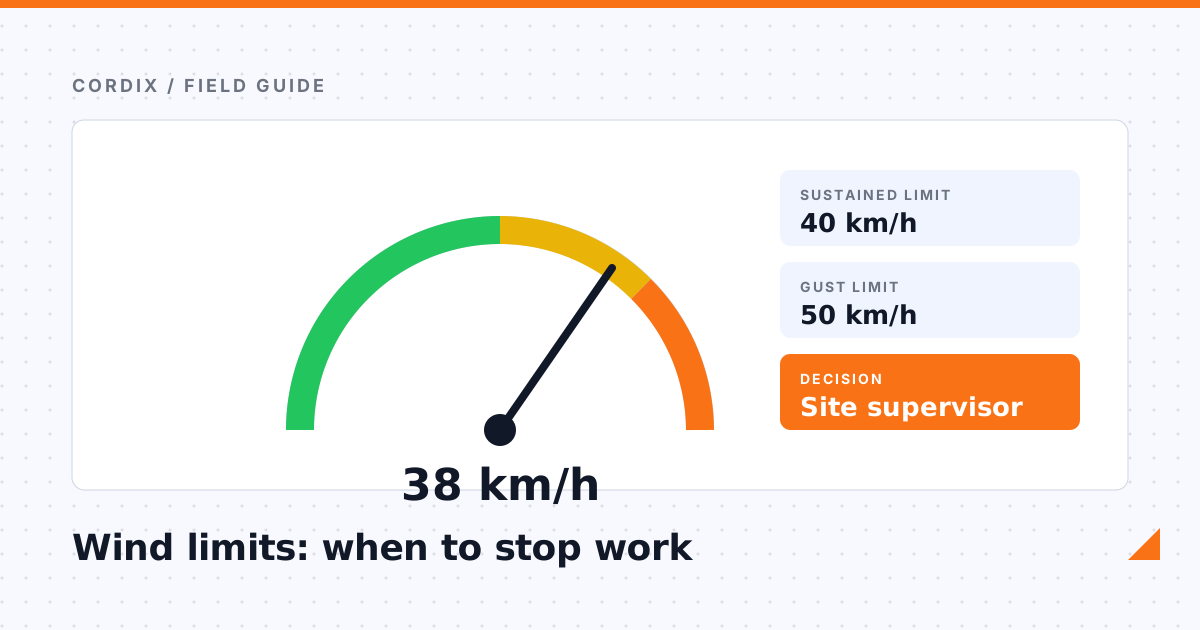
In practice, most rope access companies set a working limit for sustained wind somewhere between 30 and 40 km/h, with a lower limit for gusts and for tasks that involve handling large panels, pressure washing lances, or long tool lines. Suspended platforms and building maintenance units usually carry stricter manufacturer limits than rope work.
Treat those figures as a starting point for your own written policy, not as a rule you can cite. Your policy should name the sustained limit, the gust limit, the measurement method, and who has the authority to stop work.
Measure at height, not at street level
Wind speed at the roof of a tall building is routinely 1.5 to 2 times the reading at a nearby weather station. Downdrafts between towers and funnel effects on corners add local gusts the forecast cannot see.
Use a handheld anemometer at the anchor level at the start of the shift and whenever conditions change. Log the reading. A forecast from the office is useful for planning the day; it is not the reading that justifies continuing work.
Give the stop decision to the person on the rope
The supervising technician on site must be able to stop work without calling the office for permission. The policy should say so in writing. What the office needs is not approval authority, it is a record: who stopped work, when, at what reading, and when work resumed.
That record does two things. It protects the technician who made a conservative call, and it gives the coordinator a clean weather-delay notice to send to the client the same afternoon.
Turn weather delays into a client communication
Property managers tolerate weather delays when they hear about them on the day, with a reading and a revised plan. They stop tolerating them when they find out at invoice time.
A weather delay notice should state the site, the time work stopped, the measured wind, the policy limit, and the expected restart. Send it the same day, from the same system that sends progress reports, so the client sees one consistent stream of updates.
Weather checks built into the workflow
Cordix records the weather check at each check-in and generates client-ready weather delay notices from the same project record.
Request a demo