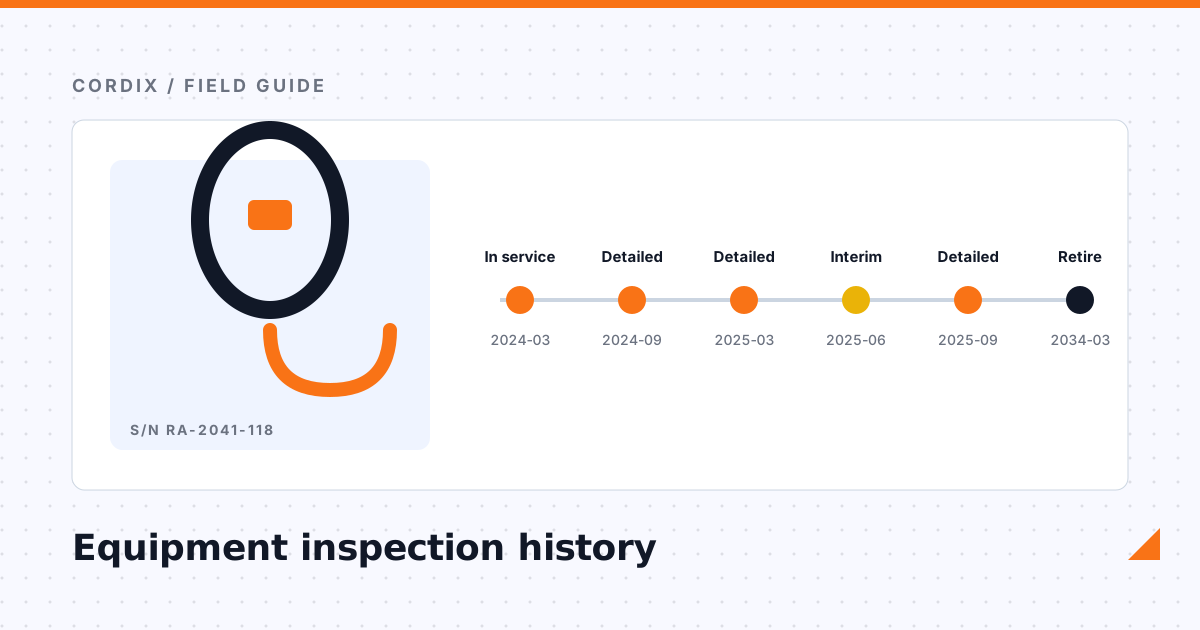
One record per item, not per type
The most common mistake is tracking equipment by category: twelve harnesses, forty ropes. That tells you what you own and nothing about what is safe. Every life-safety item needs its own record with a serial number or a unique tag, the manufacturer, the date of manufacture, the date it entered service, and the maximum service life from the manufacturer's data.
Ropes are the hardest because they get cut. When a 200-metre rope is cut into two 100-metre lengths, retire the original record and create two new ones that reference it.
Three kinds of inspection
Pre-use checks happen every shift by the technician who will use the item. They are quick, visual and tactile, and are usually recorded as a single confirmation rather than a form.
Detailed inspections happen at fixed intervals, commonly every six months for rope access PPE, by a competent person who did not necessarily use the equipment. These are recorded item by item with a pass, monitor, or fail outcome.
Interim inspections happen after any event that could have damaged the item: a fall arrest, chemical exposure, a rope running over an edge, a dropped descender. Log the trigger, not just the result.
Retirement rules that do not rely on memory
Write the retirement criteria into each record so the system can enforce them. A textile item retires at the manufacturer's maximum age from date of manufacture regardless of condition, usually ten years, and earlier under heavy use. It also retires immediately after a fall arrest, after contact with chemicals, or after a failed detailed inspection.
When an item is retired, mark it and physically remove it from service the same day. A retired harness still hanging in the van is the one that ends up on a technician.
Link equipment to people and sites
An inspection log becomes powerful when it knows who used what and where. If a rope fails a detailed inspection, you want to know which sites it was on since the last pass and whether any of them had a sharp-edge report. If a technician reports a descender that slipped, you want the record to show its inspection history without hunting through paper.
The simplest way to get there is to have equipment requests and returns flow through the same system that schedules crews, so the assignment is recorded at the moment the kit leaves the store.
What an auditor asks for
During an audit or after an incident, you will be asked for the full history of specific items: purchase, every detailed inspection with the inspector's name, any interim inspection triggers, and the retirement record. If that history lives in one place and can be exported per item, the conversation is short. If it lives in three binders and a spreadsheet, it is not.
Equipment control with a full history
Cordix tracks rope, harness, rigging, and site equipment with requests, approvals, and delivery scheduling tied to the crew and project.
Request a demo